
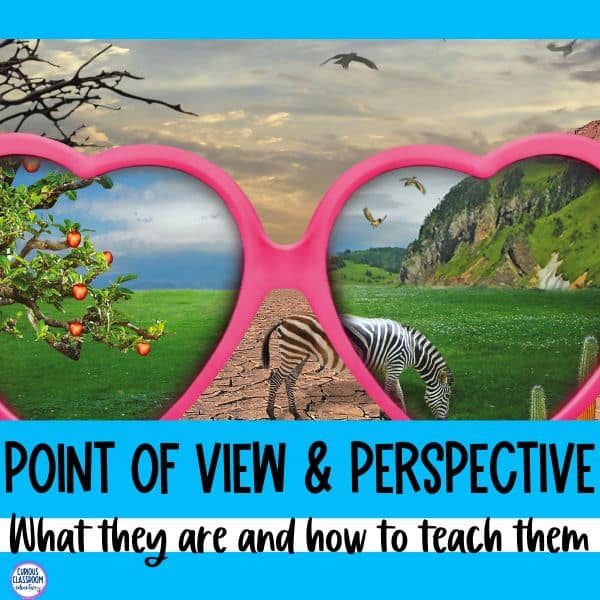
What is point of view, you ask? How is it different from perspective? Point of view refers to who the narrator of the story is and the grammar used to tell the story (first person, second person, or thrid person point of view. Perspective has more to do with how that narrator views the world as it is shaped by their own beliefs, experiences, and biases.


Point of view and perspective are key ingredients in storytelling—like the spice that makes a story come alive! Helping students understand and experiment with what is point of view vs perspective can unlock their creativity and deepen their comprehension of the stories they read and write. Here are some fun, hands-on ideas to get your students thinking about point of view and perspective in writing.
Start with a Story: Hey, Little Ant
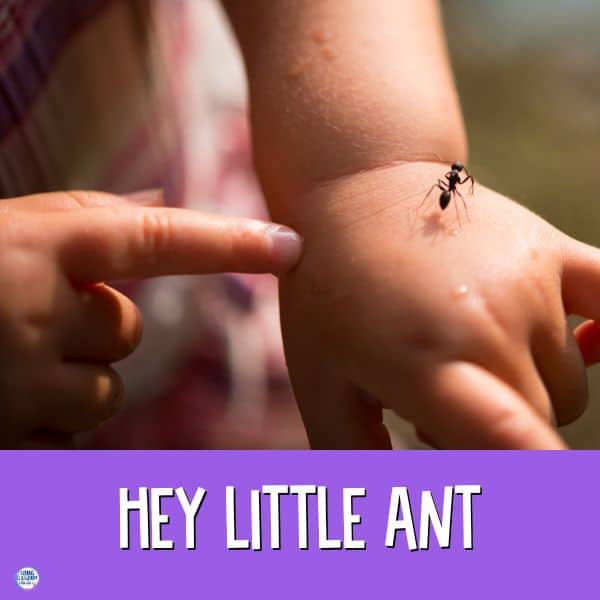
If you haven’t read Hey, Little Ant by Phillip Hoose, add it to your lesson plans ASAP! This delightful story presents a conversation between a kid and an ant, with each character sharing their perspective from thier own first-person point of view. The kid debates whether to squish the ant, while the ant pleads for its life, sharing its side of the story.
Activity: “Whose Shoes Are You In?”
After reading the book, have students write a short response to the question: Should the kid squish the ant? The twist? They must answer from the perspective of the ant or the kid. Encourage them to use evidence from the story and imagine what their chosen character might think or feel.
To take it further, let students partner up and perform a mini-debate as the ant and the kid. This activity is great for introducing the idea that every story has multiple sides.
Perspective Switch: Retelling a Scene
Choose a familiar scene from a book your class has read and challenge students to retell it from a different character’s perspective. For example, what would the story of Cinderella look like if it were told from a step-sister’s point of view?

Activity: “Step into the Character’s Shoes”
- Divide students into small groups and assign each group a well-known story (fairy tales are perfect for this activity).
- Have each group brainstorm how a supporting character might view the events.
- Ask them to rewrite a short scene from that character’s point of view.
- Let groups present their rewritten scenes to the class. Bonus: Have classmates guess which character’s perspective is being represented!
Change the Narrator
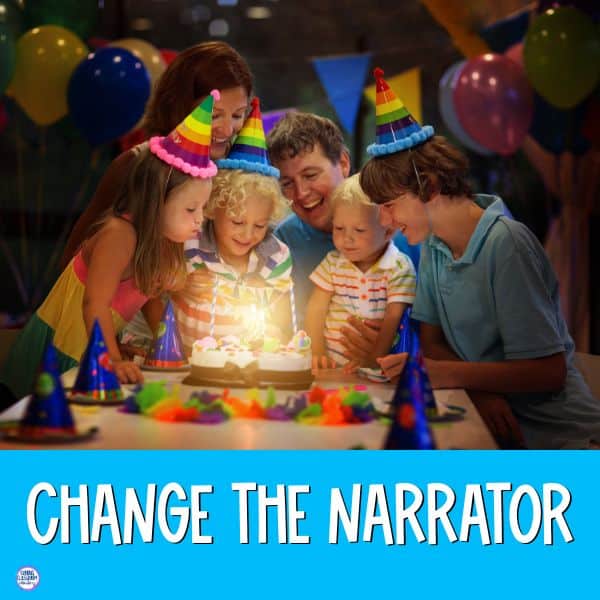
Take a simple event—like a birthday party or a lost dog—and ask students to write about it from the perspective of different narrators. What would the dog think? What about the balloons or the birthday cake? Also have them write about it from a thrid person point of view and feel the difference in tone or mood that comes from having a narrator outside of the scene.
Activity: “Through Their Eyes”
- Provide students with a basic scenario.
- Let them draw a card with a specific narrator, such as a child, a pet, or even an object.
- Have them write a short paragraph or story from that unique perspective.
- Share the results and discuss how the narrator’s perspective changes the story.
Picture This: Visual Perspective
Sometimes a visual can help students grasp the concept of perspective. Show them a photo or piece of artwork and ask them to imagine what each person or object in the image might be thinking or feeling.

Activity: “Voices in the Picture”
- Display a detailed photo or illustration (like a busy market or a playground).
- Have students choose one person or object in the image.
- Ask them to write a brief story or monologue from that character’s perspective.
This activity is not only fun but also encourages descriptive writing and empathy.
Compare & Contrast: What is Point of View? How does it Affect the Story?
Analyzing stories written from different points of view can deepen students’ understanding of how perspective shapes a narrative. Choose two short stories—one written in first person and one in third person—and have students analyze how the point of view affects the tone and mood of each story.
Guiding Questions for Discussion:
- How does the narrator’s point of view influence how we feel about the characters?
- What details do we learn (or not learn) because of the chosen perspective?
- How would the story change if it were told in third person instead of first person (or vice versa)?
This activity encourages students to think critically about choice of narrator that an author chooses and provides them with tools to better analyze texts they encounter.
Perspective Charades
Turn perspective practice into a game! In this activity, students act out scenarios from the perspective of a specific character, while the rest of the class guesses who or what they are.
How to Play:
- Write different characters or objects on slips of paper (e.g., a librarian, a superhero, a pencil).
- One student draws a slip and acts out how that character or object might feel or behave in a given situation (e.g., “stuck in traffic” or “meeting an alien”).
- The rest of the class guesses the perspective.
The Book List
I can’t end this blog post without highlighting some of my favorite novels for analyzing point of view and perspective to learn how authors use it create vivid characters. You can also find a novel study for each of these books in my TPT store or in the shop on this Curious Classroom Adventures website.
- Wonder by R.J. Palacio: The first person point of view narrator changes multiple times throughout the story offering a different perspective with each change.
- Save Me a Seat by Sarah Weeks and Gita Varadarajan: Not only do readers get to enjoy the story from two different perspectives, but it’s also written by two authors.
- Because of Mr. Terupt by Rob Buyea: Seven students in the same class each view the same events from thier own unique perspective.
- Restart by Gordon Korman: The first person point of view narration let the reader feel like they are experiencing the events of the story right along with the main character whose perspective on his life and friends is undergoing major changes.
- Wish by Barbara O’Connor: Having this story narrated by the main character allows the reader to discover important truths simultaneously with the main character and empathize with her as her perspective changes.
- The Tale of Despereaux by Kate DiCamillo: This story features an omniscient narrator telling the story from outside the scene, but the narrator addresses the audience directly with a second-person point of view.
This list could go on and on, but I’ll stop with these 6. If you’re really interested in more recommendations, just send me a quick email and I’ll share more.
Understanding what is point of view and what is perspective isn’t just a language arts skill—it’s a life skill! It helps students develop empathy and see the world through different lenses. Whether you’re debating with an ant, rewriting a fairy tale, or imagining the life of a balloon, these activities will spark creativity and critical thinking in your classroom.
So, grab your copy of Hey, Little Ant and dive into the world of perspective with your students. Who knows? You might just find yourself seeing things from a whole new angle, too!
Get 4 Free Resources Every Month!
You read that right! I’ll share an easy-to-use and engaging upper elementary resource straight to your inbox every week along with a fabulous classroom idea or two to make teaching a little less work and a lot more fun!
Here’s the first freebie to get you started!
CLICK HERE TO GRAB YOUR FIRST FREE RESOURCE TODAY!
Check out more ideas for your ELA classroom with one of these articles:
Is Daily 5 Right for Your Upper Elementary Classroom?